Why former Soviet states now challenge Russia over Ukraine war
For more than a century, Kazakhstan was ruled from Moscow – first under the Russian Empire and later the Soviet Union.
Even decades after independence, it still hardly ever challenges its powerful northern neighbor.
Until now.
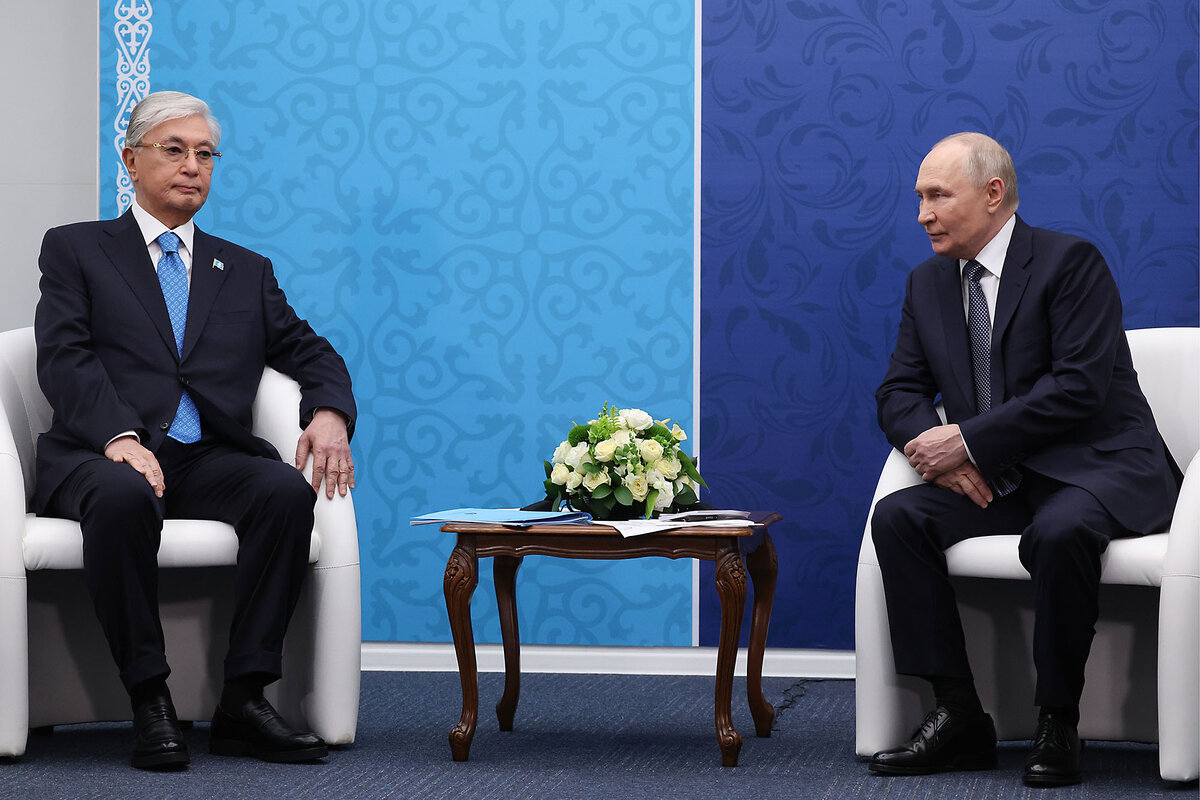
At a regional cooperation forum last month, Kazakhstan President Kassym-Jomart Tokayev appealed directly to Russian President Vladimir Putin to end Russia’s 4 1/2-year war with Ukraine. Appearing to depart from scripted public remarks, he declared that the reasons for the war “are not clear to many, including us.”
He went on to suggest that “perhaps it’s time to freeze this conflict.”
While Mr. Putin looked visibly annoyed and dismissed the idea, the rare public dissent illustrated a changing balance between Russia and post-Soviet Central Asia. Once dismissed as periphery states by Russia, they are gaining more of a say, based on geopolitical and economic realignment.
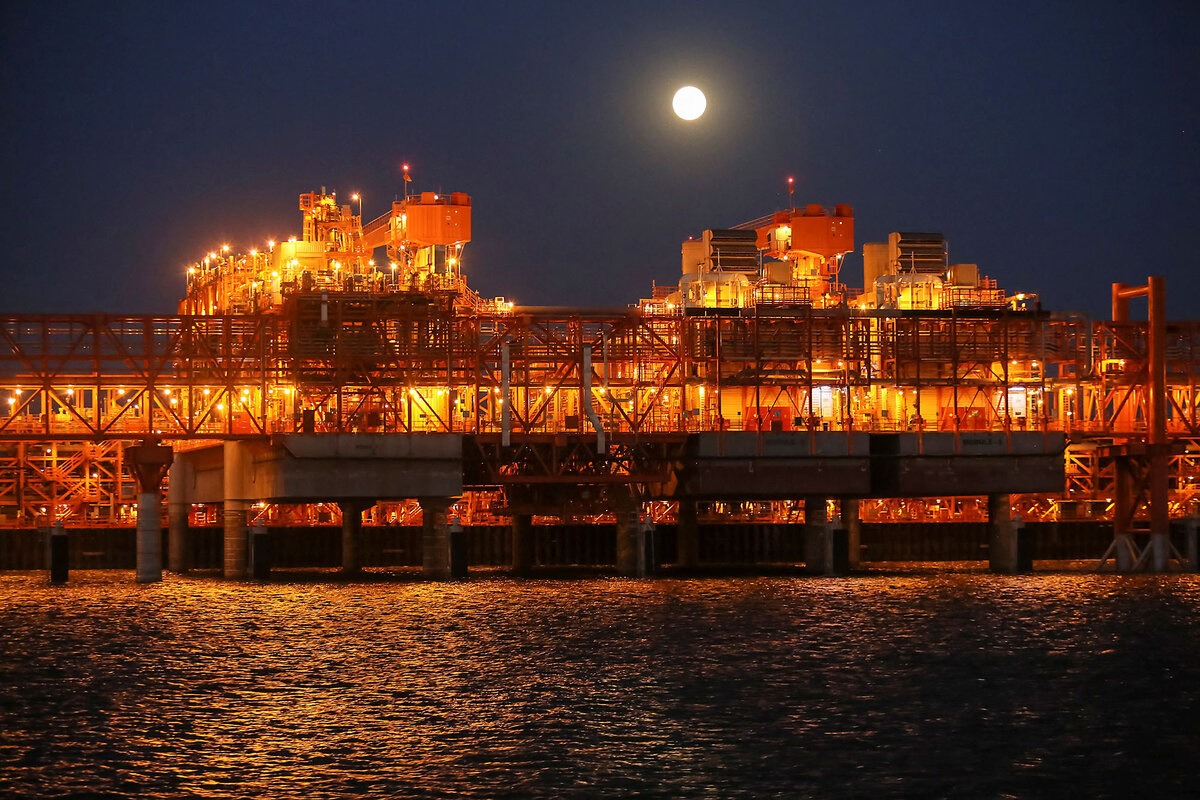
Kazakhstan, the largest landlocked country in the world, might feel empowered enough to speak plainly to Mr. Putin because of Russia’s deepening economic dependence on Central Asia. The costs of the war are also threatening its own oil exports. Kazakhstan’s main oil terminal on the Black Sea – which is at the Russian port of Novorossiysk, some 540 miles from Kazakhstan’s border – has had to close several times because of Ukrainian drone strikes on tankers, though Ukraine has now reportedly agreed to stop targeting non-Russian tankers. Oil exports make up about 35% of Kazakhstan’s gross domestic product.
“Kazakhstan is feeling the costs of this ongoing war, and that’s likely the main reason he spoke out now,” says Grigory Mikhailov, a Central Asia specialist who edits a newsletter on the region’s economy. “We don’t know the extent of the damages, but it’s likely to be hundreds of millions of dollars already.”
Advertisement
It illustrates the growing complexities affecting Moscow’s relations with some of its closest partners, especially Kazakhstan, the largest and richest of the five former Soviet republics of Central Asia.
The mainly Muslim and largely Turkic-speaking region was part of the Russian Empire and the U.S.S.R. until the Soviet collapse in 1991, but since independence also looks toward China and the West. While some of the new states have partially reduced their former dependence on Russia, Kazakhstan remains a core member of all three key Russia-led alliances created to keep former Soviet republics in Moscow’s orbit.
Almost all of the nine countries that now form one of them, the Commonwealth of Independent States, oppose Russia’s war with Ukraine. Only Belarus has backed the conflict. Some, such as Armenia and Moldova, have even expressed support for Ukraine.
Most, however, have tried to maintain a delicate balancing act by declaring neutrality, while also enforcing some Western-imposed sanctions against Russia, and continuing warm political and profitable economic relations with Moscow. Kazakhstan has played a key role helping Russia sidestep sanctions and channel investments from abroad.